Long Road Distillers Named Best Craft Specialty Spirits Distillery in the United States

Local distillery takes top honors in the USA TODAY 10Best Readers’ Choice Travel Awards Contest

Grand Rapids, Michigan – Internationally acclaimed Grand Rapids distillery, Long Road Distillers, has taken home top honors and was named “Best Craft Specialty Spirits Distillery in the United States” as part of the USA TODAY 10Best Readers’ Choice Travel Awards. Over their two year history the distillery has gained lots of attention for their award-winning, locally-sourced and craft distilled line-up of spirits, including gins, vodkas, aquavits, and whiskies.

Long Road Distillers topped a list of 20 nominees from around the country that were carefully chosen by a panel of American spirits experts. The public then had the opportunity to vote for their favorites over the course of four weeks. The nominating panel included Emily Arden Wells, editor and founder of Gastronomista, Brian Christensen, publisher and editor of Artisan Spirit Magazine, Laura Johnson, founder of You & Yours Distillery and craft cocktail blog Distillerista, and Arthur Shapiro, writer and publisher of Booze Business and author of Inside the Bottle: People, Brands and Stories.

“This is an incredible honor for us,” said Jon O’Connor, co-owner and founder of Long Road Distillers. “We have a ton of respect for every nominee on the list, and some have been leaders in our industry for years. To even have had the chance to compete against them was a big deal for us.”

The distillery is quick to recognize how this award is different from past honors, and credits not only their team members, but also their loyal customers, guests and followers.

“Unlike some competitions where the judging takes place behind closed doors, this contest put the power in the hands of those that enjoy our spirits and have supported us over the past few years,” said Kyle VanStrien, co-owner and founder of Long Road Distillers. “We’re humbled by this win and proud of our team for constantly living our mission of crafting world-class spirits right here in West Michigan!”

Long Road’s no-shortcuts approach to crafting spirits and a dedication to using locally sourced ingredients has earned them numerous honors and awards, as well as international acclaim for some lesser-known spirits categories, such as Aquavit. Their spirits can be found at the distillery on Grand Rapids’ West Side and at over 700 retailers, bars, and restaurants throughout the state of Michigan.
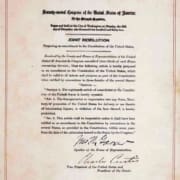

On Monday, December 5, Long Road is partnering with a bunch of our friends (The Peoples Cider Co., Creston Brewery, Two Scott’s BBQ, The Grand Rapids Chapter of the United States Bartenders Guild, Local First of West Michigan, and SideCar Studios) to throw the first Annual Grand Rapids Repeal Day Party to celebrate the end of the 18th Amendment and the fall of Prohibition. As a bit of a pre-game to Monday’s party, we thought a bit of background might be useful in understanding the gravity of the Day! So, in honor of the 21st Amendment to the United States Constitution, 21 fast facts about the rise and fall of Prohibition:

  1. The 18th Amendment to the United States Constitution was ratified on January 16, 1919, effectively banning the manufacture, distribution, and sale of alcoholic beverages in the U.S.
  2. The State of Michigan had already enacted their own prohibition on liquor 2 years earlier, on May 1, 1917
  3. The Eighteenth Amendment was the crowning achievement of the temperance movement, a social effort against the consumption of alcohol which began in the early 19th Century
  4. The temperance movement was strong in Grand Rapids and Michigan as a whole with the headquarters of the Woman’s Christian Temperance Union in Petoskey, Michigan and the establishment of a Grand Rapids Chapter.
  5. The National Prohibition Act was enacted to carry out the intent of the 18th Amendment.
  6. It was known informally as the Volstead Act, named after Andrew Volstead, Chairman of the House Judiciary Committee, who help enact the legislation.
  7. The Volstead Act aimed to: prohibit intoxicating beverages; regulate the manufacture, sale, or transport of intoxicating liquor; and ensure an ample supply of alcohol and promote its use in scientific research.
  8. The Volstead Act did NOT specifically prohibit the use of intoxicating liquor.
  9. The Act defined “intoxicating liquor” as any beverage containing more than 0.5% alcohol by volume.
  10. Under Prohibition, crime rates skyrocketed as gangs took over the production, importation and distribution of alcohol
  11. One of the most infamous gangsters of the Prohibition era was Chicago’s Al Capone.
  12. Al Capone has West Michigan ties, having owned a hide-out cottage on Gun Lake and a favorite corner booth at Nick Fink’s, Grand Rapids’ oldest bars.
  13. Canada became the primary source for illicit alcohol in Michigan, and the Detroit-Windsor connection was the hub of bootlegging activities.
  14. There were an estimated 16,000 to 25,000 speakeasies operating in Detroit in 1928
  15. The Michigan State Police found 800 people inside on speakeasy in Detroit, the Deutches Haus, including Detroit Mayor John Smith, Congressman Robert Clancy and Sheriff Edward Stein.
  16. Congress proposed the 21st Amendment on February 20, 1933
  17. The 21st Amendment is the only Amendment to the U.S. Constitution that repeals a prior amendment.
  18. The 21st Amendment is the only Amendment to the U.S. Constitution that was ratified by state ratifying conventions, rather than being offered to the state legislatures for ratification.
  19. Michigan was the first of the 48 states to respond to the amendment and ratified it at a “state ratifying convention” on April 10, 1933.
  20. Ratification of the 21st Amendment was completed on December 5, 1933.
  21. Section 2 of the Amendment gives states absolute control over alcoholic beverages, with some states maintaining a prohibition on alcohol long after the 21st Amendment was ratified (Mississippi remained “dry” until 1966 and Kansas prohibited public bars until 1987!)


The 21st Amendment to the United States Constitution reads:

Section 1. The eighteenth article of amendment to the Constitution of the United States is hereby repealed.

Section 2. The transportation or importation into any State, Territory, or possession of the United States for delivery or use therein of intoxicating liquors, in violation of the laws thereof, is hereby prohibited.

Section 3. This article shall be inoperative unless it shall have been ratified as an amendment to the Constitution by conventions in the several States, as provided in the Constitution, within seven years from the date of the submission hereof to the States by the Congress.


To celebrate the ratification of the 21st Amendment and the repeal of the 18th Amendment, join us Monday, December 5 from 8 pm to Midnight and enjoy cocktails, beer, cider, bbq and live music at 642 Bridge St NW, Grand Rapids, MI 49504. Here’s a link to the Facebook event page. Here’s a link to purchase your tickets for the event in advance. Highlights of the evening include:

  1. Cocktails from Long Road Distillers
  2. Beer from Creston Brewery
  3. Hard Cider from Peoples Cider Company
  4. BBQ from Two Scott’s BBQ Food Truck
  5. Live Music with The Bootstrap Boys and Jesse Ray and the Carolina Catfish

Dress in your Sunday Best and party like it’s 1933! Cheers!

GRAND RAPIDS, Mich (WOOD) – Now that November is well underway, it’s the perfect time to introduce a new libation that can warm you up from the inside out. Kyle Van Strien and Jon O’Connor from Long Road Distillers joined eightWest with some samples of their latest offerings. They will be releasing their new Long Road bourbon whiskey Tuesday, November 8, including a big release party from 4 p.m. until midnight. Come grab a seat at the bar to enjoy half off whiskey cocktails during the party. Check out the video to see more details about this tasty release party.

Single barrel releases will be put out in some retail locations throughout the state at Meijer, Art of the Table, the Side Bar, Rishi’s Intenational Beverage.

Original post on WOOD TV 8 Website here.

Check out Parts 1 and 2 of the “What is Bourbon?” Series here and here.

For Part 3 of our “What is Bourbon” series, we look at the ingredients that make bourbon bourbon. It may seem straight forward, but when you really dig into the Code of Federal Regulations (and the Beverage Alcohol Manual from the TTB, in particular), you learn there are 42 different “types” of whisky, all with different defining characteristics – but many that are VERY slight.

First, as a bit of a refresher, recall that the legal definition of bourbon whisky, according to the TTB, is:

Whisky produced in the U.S. at not exceeding 80% alcohol by volume (160 proof) from a fermented mash of not less than 51 percent corn and stored at not more than 62.5% alcohol by volume (125 proof) in charred new oak containers.


So, why corn? The simplest answer is “corn is what was available”. When the early bourbon distillers of Kentucky began making whisky, corn was cheap and easy to come by. Once bourbon became popular, though, many people tried to pass their blended whisky or neutral spirits off as bourbon. To help guide the industry, the Federal government made several decisions around the end of the 19th century like the Bottled-in-Bond Act of 1897 (to separate straight whiskies from blended whiskies) and the Pure Food and Drug Act of 1906 (that first regulated what could be called Bourbon). And in the 1909 “Decision on Whisky”, President Taft determined that Bourbon Whisky must be made from a majority corn. But, it wasn’t until the fall of Prohibition that the government finally laid out the Standard’s of Identity for Distilled Spirits (SIDS) – which is part of the U.S. Code of Federal Regulations, Title 27, Part 5 – a chapter we as distillers refer to nearly every day. First adopted in 1935, the SIDS is where we get the definition above and the mandate that bourbon must have not less than 51% corn in the mash bill.

Although corn must be the predominant ingredient in a bourbon’s mash bill (recipe), most bourbon contains two or three other grains as well. Wheat and Rye are often used as “flavoring” ingredients in bourbon, and Malted Barley almost always makes up a percentage of the mash bill to offer enzymes that aid in fermentation and flavor development. Wheated Bourbon is known to hold up better over long stretches in a barrel. Bourbon with heavier doses of rye in the mash bill will have a bit more spice characteristic. Once you know the 51% rule, you can more easily define other whiskies, too. Rye whisky must contain not less than 51% rye. Wheat whisky must contain 51% or more wheat. And so on.

As a new distillery with new equipment and lots of ideas about mash bills for our whisky, the Long Road team decided to offer a series of experimental whiskies that we call the Wayfarer’s Whisky Series. These whiskies are small batch (some as small as a single 30 gallon barrel) and span several different class/types of whiskies. Over the past 6 months, we’ve released a Wheat Whisky, Rye Whisky, and Malt Whisky, all milled, mashed, fermented, distilled, aged and bottled 100% on-site from locally grown ingredients.

With our Bourbon, we wanted to try a few different mash bills to determine what we like best and what we want to invest in heavily for decades to come. Our team landed on four unique mash bills:

  • Batch BB01 – THE FOUR GRAIN BOURBON
    • 63% Yellow Corn
    • 17% Rye
    • 13% Red Winter Wheat
    • 7% Malted Barley
  • Batch BB02 – THE HIGH CORN & RYE BOURBON
    • 81% Yellow Corn
    • 12% Rye
    • 7% Malted Barley
  • Batch BB03 – THE WHEATED BOURBON
    • 65% Yellow Corn
    • 28% Red Winter Wheat
    • 7% Malted Barley
  • Batch BB04 – THE HIGH CORN & WHEAT BOURBON
    • 81% Yellow Corn
    • 12% Red Winter Wheat
    • 7% Malted Barley

Each mash bill provides incredibly distinct flavor profiles, aromas, and finishes. The high wheat offers lots of vanilla, butterscotch, and caramel flavors. The high rye is more earthy with peppery spice notes.

If you want to see the difference between the mash bills, you have the opportunity to try 3 out of the 4 as single barrel bottlings! We’ve partnered with the following retailers to release Long Road Single Barrel Bourbon in the coming weeks:

  1. Meijer, Grand Rapids, Ann Arbor, Howell, Okemos: The Wheated Bourbon, Batch BB03, Barrel #’s 15-0043 (Knapp’s Corner Meijer), 15-0044 (Cascade Meijer), 15-0045 (Ann Arbor Meijer), 15-0046 (Okemos Meijer) and 15-0047 (Howell Meijer)
  2. Art of the Table, Grand Rapids: The Four Grain Bourbon, Batch BB01, Barrel #15-0030
  3. Rishi’s International Beverage, Grand Rapids: The High Corn & Wheat Bourbon, Batch BB04, Barrel #16-0001 (at 93 proof) and #16-0002 (at cask strength)
  4. SIDEBAR GR and Buffalo Trader’s, Grand Rapids: The Four Grain Bourbon, Batch BB01, Barrel #15-0033


On Tuesday, November 8, we’ll be releasing a special blend of three of the batches (BB01, BB02, and BB03) at the distillery for our Long Road Bourbon Release Party! This unique blend of bourbons contains an all-Michigan lineup of yellow corn, red winter wheat, rye and malted barley.

At Long Road, we’re proud to use all Michigan-grown corn, wheat, rye and barley, and handcraft every one of our spirits from scratch on-site. By partnering with farmers like Denny Heffron (Heffron Farms, Belding, MI) and Byron Center-based Pilot Malt House, we are able to create spirits that have a sense of place – offering uniquely Michigan characteristics that you won’t get anywhere else.

Stay tuned for Part 4 of the “What is Bourbon” series: “…and stored at not more than 62.5% alcohol by volume (125 proof) in charred new oak containers,” where we’ll explain the barrel aging process and its purpose!  

For Part 1 of the “What is Bourbon” series, click here.

Today, we wade into a lesser-known part of the definition of Bourbon, which also means it’s a bit less controversial.

First, as a bit of a refresher, recall that the legal definition of bourbon whisky, according to the TTB, is:

Whisky produced in the U.S. at not exceeding 80% alcohol by volume (160 proof) from a fermented mash of not less than 51 percent corn and stored at not more than 62.5% alcohol by volume (125 proof) in charred new oak containers.


The phrase “Alcohol by Volume” (ABV), when associated with a percentage, is quite literally what it sounds like: the measure of the content of ethanol (alcohol) in an alcoholic beverage by volume. It is required by the Code of Federal Regulations for distilled spirits labels to include the ABV on the front of the bottle.

The term “proof”, while not required on spirits labels, is often included, particularly when it comes to whisk(e)y. The history of the term dates back to the 16th century and involves gun powder, taxes, and rum – a fun history indeed, but something for another blog post! The easiest way to understand proof in the United States is simply twice the ABV of an alcoholic beverage. So, a 100 proof whisky has an ABV of 50%.

This part of the definition has to do with the ABV/proof of the spirit as it comes off the still. Distillers are able to change the conditions in the still to control the ABV/proof during distillation, including the amount of heat applied to the mash, the amount of plates the alcohol vapor comes in contact with, or the amount of cooling water in the condensers that will cause reflux and re-distillation, just to name a few. The mandate here is to keep the spirit coming off of the still at or below 80% alcohol or 160 proof.

The question one could ask is: why limit this?

The answer: Taste and aroma.

The process of distillation is really a process of volume loss. To offer a rough example, we take 500 gallons of 6% mash/wash, distill it up to 45% ABV and between the heads cut, tails cut, and what’s left behind in the still, we lose most of our volume, yielding approximately 80 gallons of spirit. We’ll then distill that a second time to a higher ABV and lose even more volume. Essentially, we’re pulling the alcohol out into higher and higher concentrations, leaving behind water, grain, and yeast.

In this process, we’re not only leaving behind water, but flavor compounds, congeners, and impurities.

By definition, vodka must be distilled up to or exceeding 190 proof or 95% alcohol. The process of distilling something to 190 proof will theoretically leave it “odorless and tasteless”. The alcohol was concentrated and water and compounds were left out.

So, by requiring Bourbon to be distilled at or below 80% alcohol or 160 proof, more flavor is maintained. Now, we can’t say that maintaining flavor is the reason the Federal Government mandated this limit, but what they were trying to do was create a recognizable, familiar type and class so consumers could understand what they’re getting in a bottle. By mandating a maximum proof at distillation, the hope is that bourbon whisky produced in this manner with then have the “taste, aroma and characteristics generally attributed to” this type of whisky.

If you want to experience this phenomenon in person, stop in to the distillery and taste the difference between our unaged Corn Whisky, distilled to only 152 proof, and our vodka, distilled to 191 proof. While the mash bills (recipes) are different, you’ll still begin to understand the difference “proof at distillation” has on a spirit. The Corn Whisky has loads of flavor, even a bit of bite, while the Vodka flavors are much more soft and subtle.

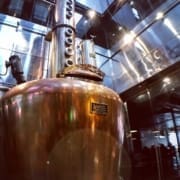
At Long Road, our experienced team of distillers takes great care in crafting a unique product with robust flavors in a consistent manner. We’re proud of the fact that we worked with Vendome Copper and Brass, arguably the best whisk(e)y still manufacturers in the world (not many people will argue this fact), to create a custom 500 gallon copper pot still that allows us to handcraft our bourbon both precision and a touch of artistry. And, we’re eager for you to taste the difference when you Take the Long Road!

Stay tuned for Parts 3 & 4 of “What is Bourbon?” coming over the next few days!

Join us Tuesday, November 8 between 4 pm and midnight for the release of Long Road Bourbon!

International Flavored Vodka Tasting Event Awards Grand Rapids Distillery with Double Gold

Long Road’s Wendy Peppercorn Vodka stands out from a crowded field of flavored spirits.

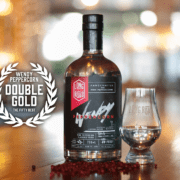
Grand Rapids, Michigan – Internationally recognized Grand Rapids distillery, Long Road Distillers, announced more top honors for their line-up of spirits, this time coming from a competition in New York City. The distillery was awarded a Double Gold medal for Long Road Wendy Peppercorn at The Fifty Best Flavored Vodka tasting event.

The award-winning-101-proof spirit is made from 100 percent locally grown red winter wheat, milled, mashed, fermented and distilled on-site at the Westside distillery,  then redistilled with pink peppercorns, the berry from the Peruvian Peppertree. Non-chill filtration techniques give all of Long Road spirits a smooth, handcrafted taste rather than the overly processed, astringent flavors that result from the carbon and charcoal filtration technique used by many. Wendy Peppercorn is  a whopping 101 proof, or 50.5  percent alcohol by volume (ABV), a full 10.5% higher than any of the other entries in the Fifty Best competition.

“As far as we know, Wendy Peppercorn is the only pink peppercorn flavored vodka in the world,” said Co-Owner Kyle VanStrien. “Pink peppercorn happens to be one of the botanicals in our gin, and since we’re distilling each gin botanical individually, we discovered that we loved pink peppercorn all by itself!”

“We’re products of the 80’s,” said Co-Owner Jon O’Connor in reference to the name Wendy Peppercorn. “Most of us on the Long Road team grew up watching the movie The Sandlot. We all remember the scene where Michael “Squints” Palledorous expressed his passion for Wendy Peffercorn, the lifeguard at the community pool, and we feel the same way about this vodka! This is our nod to a classic movie for our generation, and a fun way for us to play up the high proof of this spirit. Wendy 101 has a great ring to it, but we’ve also left the spirit at 101 proof to amplify the flavors and keep the essential oils that carry over in the distillation process suspended.” Similar to an absinthe or ouzo, Wendy Peppercorn will cloud up with the addition of water, altering the aromas, texture, and flavor to make the spirit more floral and fruity.

Spirits from around the world were entered into the Fifty Best event. 17 pre-qualified judges evaluated each spirit separately based on preset tasting rules. Each spirit was served to judges in fresh glasses from newly sealed bottles and was served slightly above room temperature to ensure optimum flavor. Judges noted their nose, palate and finish impressions of Long Road Wendy Peppercorn, which provided, “attractive spice notes, a wonderful mouthfeel, and a surprisingly sweet, soft and subtle finish.” The judges added that it would be, “perfect for a Bloody Mary!”

Long Road Distillers has garnered a multitude of international honors for their line of spirits. The most notable accolades were earned at the world’s largest spirits competitions and include several “Best in Show” awards, nearly a dozen double-gold medals, and numerous gold, silver and bronze medals. The West Michigan Distillery has also expanded distribution to over 400 Michigan grocers, specialty retailers, and bars and restaurants in the past year.

“This has been a huge year of progress for Long Road,” said O’Connor. “Every award won and distribution expansion made motivates our team to stay committed to our mission and values. We look forward to what the future has in store for our distillery.”

Grand Rapids Distillery Awarded Top Honors at SIP Awards, World’s Largest Consumer Tasting Competition

Long Road Distillers adds to recent international acclaim and awarded a Platinum Medal for Long Road Gin, and Gold Medals for Long Road Aquavit and Long Road Vodka.

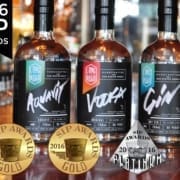
Grand Rapids, Michigan – Internationally recognized Grand Rapids distillery, Long Road Distillers, announced three new awards from the world’s largest consumer tasting competition. At this year’s SIP Awards, the distillery won a Platinum Medal, the highest honors, for Long Road Gin, and added two new Gold Medals for Long Road Aquavit and Long Road Vodka.

Long Road’s award-winning line-up of spirits are made from 100 percent locally grown grain and are made 100 percent on-site at the distillery on Grand Rapids’ West Side. Both Long Road Gin and Long Road Aquavit have been recognized as “Best in the World” at recent international competitions; recognition that the Long Road team attributes to several factors, locally grown ingredients.

“Every one of our spirits start from the finest, locally-sourced ingredients,” said Brian Pribyl, Head Distiller at Long Road. “We owe a ton of credit to our suppliers, like Heffron Farms and Pilot Malt House, who continue to provide us with top-notch wheat, rye, corn and barley, grown right here in West Michigan. We’re proud to show off the amazing agriculture we have available to us through the spirits we craft at Long Road.”

Nearly 500 spirits brands from around the world were entered into the 2016 SIP Awards, held in Newport Beach, California. A panel of 98 pre-qualified, consumer judges evaluated each spirit separately, in a double blind manner, based on preset tasting rules, using the SIP Awards’ patented delivery system to ensure a consistent, focused, and accurate survey of consumer impressions in each category. Platinum, Gold, Silver, and Bronze medals were awarded in 59 categories.

Long Road Gin was the highest rated domestic gin, winning a Platinum Medal, and Long Road Aquavit was awarded a Gold Medal and named Best Aquavit, an honor the spirit also won in Denver, San Francisco, San Diego and Seattle.

“We’re extremely proud of our team for all of the hard work they have put in to get us to this point,” said Jon O’Connor, co-owner of Long Road Distillers. “Our no shortcuts approach, combined with quality ingredients and amazing talent, continues to reaffirm our commitment to making world-class spirits right here in our city!”

For more information about Long Road Distillers please visit: www.longroaddistillers.com.

For more information about the SIP Awards please visit: www.SIPAwards.com.

###

About Long Road Distillers:

Long Road Distillers was born from the belief that making world-class spirits means never taking shortcuts along the way. After becoming the first craft distillery in Grand Rapids, Michigan, Long Road Distillers formed relationships with local farmers to bring that mission to Grand Rapids’ West Side neighborhood. Each spirit produced at Long Road Distillers is milled from locally sourced ingredients, fermented, and distilled on-site. The result is an uncompromised lineup of spirits including Vodka, Gin, Whisky and more. Their spirits, along with a handcrafted collection of cocktails and a wide variety of food can be enjoyed at their tasting room.

About the SIP Awards: Catering to the opinions and palates of the discerning public, the SIP Awards present a unique spirit judging competition, unaffected by industry bias. This pragmatic and refreshing model of evaluation provides an honest stage for feedback and recognition where top brands showcase their achievements. To learn more about the SIP Awards beverage competition, venue partnerships, or for a complete list of 2016 winners, visit www.SIPAwards.com.

The first distillery in Grand Rapids, Long Road Distillers, announced today international acclaim at the 2016 Los Angeles International Spirits Competition. This is the third international spirits competition in which the West Michigan distillery was awarded one of the top honors in 2016. The awards include Best Aquavit, six gold medals, a silver medal and a bronze medal in various packaging design and spirit categories.

“We aim to be different from other distilleries in the way we source our ingredients and craft our spirits,” said Kyle Van Strien, co-owner at Long Road Distillers. “For us to be recognized again for our Aquavit reaffirms our commitment to creating old-world spirits from locally sourced ingredients. We are proud to call Grand Rapids ‘home’ and to bring these awards and high quality spirits to the community.”

Long Road Distillers’ Aquavit, which earned Best Aquavit in the international competition, is a staple of Scandinavian culture, often found at festive gatherings. Embracing time-honored distillation methods, Long Road distillers crafts an Aquavit that’s made in Michigan yet true to its Northern European roots.

Long Road Distillers received the following awards at the 2016 Los Angeles International Spirits Competition:

  •     Gold Medal, Best Aquavit – Long Road Aquavit
  •     Silver Medal – Long Road Gin
  •     Bronze Medal – Long Road Vodka

In addition to spirit taste-based awards, Long Road Distillers was recognized for their packaging design—a category somewhat unique to the Los Angeles International Spirits Competition. This category awards spirits based on their look and presentation. Long Road Distillers received five of 36 packaging design awards – all five Gold Medals – including Best Series, Best Typography, and Best Design Aesthetics.

“We don’t cut corners with our spirits, and the same is true for the way we present them,” said Jon O’Connor, co-owner at Long Road Distillers. “We’re excited to share this recognition not only with our team at the distillery, but also our graphic designer and copywriter who have been with us since we first dreamt up Long Road over two years ago.”

The 6th Annual Los Angeles International Spirits Competition was held on May 10 & 11, 2016 at Fairplex in Pomona, California. Participants entered products within the categories of rum, whiskey, gin, shochu, vodka, brandy, liqueurs, tequila, mixers, other spirits and packaging design. The products were judged in a blind format ranked on a 100-point scale by a prestigious panel of 20 world renowned spirits authorities.

In addition to these awards, Long Road Distillers has garnered a multitude of international honors for their line of spirits. The most notable accolades were earned at three major spirits competitions and include three double-gold medals, six gold medals, two silver medals, three bronze medals and multiple best in show recognitions. The West Michigan Distillery was recently named one of the “Best New Distilleries in the World”, and has also expanded distribution to over 200 Michigan locations in the past year.

For more information about Long Road Distillers please visit: http://www.longroaddistillers.com

###

About Long Road Distillers:
Long Road Distillers was born from the belief that making world-class spirits means never taking shortcuts along the way. After becoming the first craft distillery in Grand Rapids, Michigan, Long Road Distillers formed relationships with local farmers to bring that mission to Grand Rapids’ West Side neighborhood. Each spirit produced at Long Road Distillers is milled from locally sourced ingredients, fermented, and distilled on-site. The result is an uncompromised lineup of spirits including Vodka, Gin, Whisky and more. Their spirits, along with a handcrafted collection of cocktails and a wide variety of food can be enjoyed at their tasting room.

We were recently mentioned in the Eat Local West Michigan blog! Check it out below.

We all know Grand Rapids is Beer City, but there’s a big chance “Spirit City” will make its way into the Grand Rapids lexicon the near future. Since 2013, nearly 40 distilleries have popped up all over Michigan, with about five of them calling Grand Rapids their home. Compared to the rest of the nation, Michigan is third in craft distilling.

New Holland Brewing Company was ahead of the curve when the brewery began distilling in 2005 and started to sell their spirits in 2008. New Holland started out with gin, whiskey and rum and has since then added vodka and liqueur to the lineup.

There’s a reason, however, why beer has seen a huge boom and distilling is just getting geared up. It all has to do with distilling laws and a lot of red tape. Michigan has been able to thrive in distilling recently because of the state’s legislature. Each state has its own laws on distilling, with some being more progressive than others. Distillers looking to open up shop have to go through local, state and federal laws. This includes getting labels and formulas approved, zoning ordinances and keeping track of customer purchases. Some states, like Arizona, didn’t even offer distilling licenses until about a year ago.

Read more here!

A local craft spirits maker has won the Best Gin honor at a global blind-tasting competition for gin.

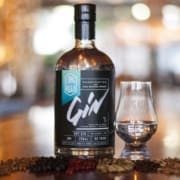
The gin by Grand Rapids-based Long Road Distillers won the top honor and a double-gold medal at the recent Fifty Best gin event, which included 17 pre-qualified judges tasting 41 gins.

Holland-based Coppercraft Distillery also took home a silver medal at the global tasting.

Long Road gin

Long Road’s gin starts with a neutral spirit made at 537 Leonard St. NW from locally grown red winter wheat and features an individually distilled six-ingredient botanical blend.

The product was noted as having notes of lemon, lime, cherry, floral, juniper, eucalyptus and more.

“When we started Long Road Distillers, Jon (O’Connor) and I made a promise to ourselves that we would source our ingredients locally, mill, mash, ferment and distill everything on site at our distillery and filter it honestly,” said  Kyle VanStrien, co-owner, Long Road Distillers. “I believe our commitment to sourcing ingredients, rather than spirits, and using time-honored techniques without taking shortcuts is what sets us apart from others in the industry and in competitions like these.”

Ten gins were awarded double-gold medals, and Long Road’s gin was rated atop other brands, such as Hendricks gin and other staples from the Netherlands and the U.K.

The double-gold medal for gin joins three double-gold medals recently awarded to the distillery’s aquavit. The gin has also previously been awarded gold, silver and bronze medals at various spirit competitions.

Long Road Distillers celebrated its first anniversary last weekend.

“This has been a huge year of progress for Long Road,” said Jon O’Connor, co-owner, Long Road Distillers. “Every award won and distribution expansion made motivates our team to stay committed to our mission and values. We look forward to what the future has in store for our distillery.”

Coppercraft gin

Judges noted smell and taste notes such as lemon, honey dew, toffee, pine, smoky and licorice when evaluating Coppercraft gin.

Coppercraft Distillery includes 13 botanicals in its gin.

Full story here.

Book A Tour