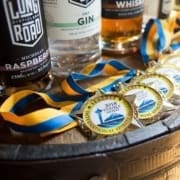
Grand Rapids Distillery to Release Apple Brandy Made in Partnership with Local Orchard, Cidery

Long Road Apple Brandy will be released on Tuesday, October 9 at the Long Road Distillers Tasting Room

Grand Rapids, Michigan – Grand Rapids-based Long Road Distillers will release a new barrel-aged Apple Brandy on Tuesday, October 9, at the distillery on Grand Rapids’ West Side. Statewide distribution of Long Road Apple Brandy will follow later this month.

Long Road Apple Brandy was made in partnership with Schaefer Orchard and Pux Cider Company based out of nearby Conklin, Michigan. The 80-proof spirit has been aged in used whisky barrels for nearly a year, allowing flavors to mellow and develop over time, resulting in bright apple and honey aromas, and a dry floral finish.

“Considering our proximity to one of the best fruit growing regions in the world, we view fruit brandies as a huge opportunity for us to highlight local agriculture,” said Jon O’Connor, co-owner and co-founder of Long Road, referring to the Fruit Ridge located just north of Grand Rapids. “We’re really pleased with the way the tart, local apples shine through in Long Road Apple Brandy. The varieties of apples and the style of cider Pux is making really lend themselves to high quality brandy.”

To celebrate the release, Long Road will be offering half-off samples and featured cocktails at the distillery from 4pm to Midnight on Tuesday, October 9. It will also be the first opportunity to purchase a bottle of Long Road Apple Brandy to bring home.

Follow along and stay up to date on release details through the distillery’s FaceBook page @longroaddistillersgr.

###

About Long Road Distillers:

Long Road Distillers was born from the belief that making world-class spirits means never taking shortcuts along the way. After becoming the first craft distillery in Grand Rapids, Michigan, Long Road Distillers formed relationships with local farmers to bring that mission to Grand Rapids’ West Side neighborhood. Each spirit produced at Long Road Distillers is milled from locally sourced ingredients, fermented, and distilled on-site. The result is an uncompromised lineup of spirits including Vodka, Gin, Whisky and more. Their spirits, along with a handcrafted collection of cocktails and a wide variety of food can be enjoyed at their tasting room on Leonard Street. www.LongRoadDistillers.com

Long Road Distillers Nominated as Best Craft Specialty Spirits Distillery in the United States

Local distillery faces tough competition in the USA TODAY 10Best Readers’ Choice Travel Awards Contest

Grand Rapids, Michigan – Grand Rapids distillery, Long Road Distillers, has been nominated as the “Best Craft Specialty Spirits Distillery in the United States” as part of the USA TODAY 10Best Readers’ Choice Travel Awards. This marks the second year in a row for their nomination. Over their three-year history the distillery has gained lots of attention for their award-winning, locally-sourced and craft distilled line-up of spirits, including gins, vodkas, aquavits, and whiskies.

The public will choose the top 10 by casting votes on 10best.com. Each person may vote for their favorites once per day until September 3. Winners will be announced on Friday, September 14.

Long Road Distillers is one of 20 nominees from around the country that were carefully chosen by a panel of American spirits experts. The nominating panel includes Emily Arden Wells, editor and founder of Gastronomista, Brian Christensen, publisher and editor of Artisan Spirit Magazine, Ziggy Eschliman, founder of ZigStyle and award-winning radio host, Kevin Gray, co-founder and editor-in-chief of Bevvy, Eric Grossman, a food and beverage writer and author of Craft Spirits, and Jack Robertiello, a writer and acclaimed wine and spirits judge.

“This nomination is another incredible honor for us,” said Jon O’Connor, co-owner and founder of Long Road Distillers. “We have a ton of respect for every nominee on the list, and some have been leaders in our industry for years. To even have the chance to compete against them is a big deal for us.”

The distillery is quick to admit how this award is different from other competitions, and that they will be relying on their loyal supporters and the community in West Michigan that has garnered similar national attention for the craft beer scene that has developed over the years to help them top the list of winners.

“Unlike some competitions where the judging takes place behind closed doors, this contest puts the power in the hands of those that enjoy our spirits and have supported us over the past several years,” said Kyle VanStrien, co-owner and founder of Long Road Distillers. “We’re humbled by this nomination and hopeful that we can spread the word far and wide to take home another win for Grand Rapids!”

Long Road’s no-shortcuts approach to crafting spirits and a dedication to using locally sourced ingredients has earned them numerous honors and awards, as well as international acclaim for some lesser-known spirits categories, such as Aquavit. Their spirits can be found at the distillery on Grand Rapids’ West Side and at over 1,000 retailers, bars, and restaurants throughout the state of Michigan.

###

About Long Road Distillers:

Long Road Distillers was born from the belief that making world-class spirits means never taking shortcuts along the way. After becoming the first craft distillery in Grand Rapids, Michigan, Long Road Distillers formed relationships with local farmers to bring that mission to Grand Rapids’ West Side neighborhood. Each spirit produced at Long Road Distillers is milled from locally sourced ingredients, fermented, and distilled on-site. The result is an uncompromised lineup of spirits including Vodka, Gin, Whisky and more. Their spirits, along with a handcrafted collection of cocktails and a wide variety of food can be enjoyed at their tasting room on Leonard Street. www.LongRoadDistillers.com

About 10Best.com: 10Best.com provides users with original, unbiased, and experiential travel content of top attractions, things to see and do, and restaurants for top destinations in the U.S. and around the world. The core of the site’s uniqueness is its team of local travel experts: a well-traveled and well-educated group who are not only experts in their fields – and their cities – but discriminating in their tastes. These local experts live in the city they write about so the content is constantly updated. 10Best.com averages 5 million visitors per month. It was acquired by USA TODAY in January of 2013.
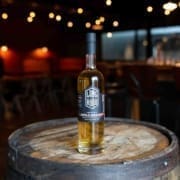
Long Road Distillers Announces New Honors from Seattle International Spirits Competition

Grand Rapids distillery awarded 6 new medals, including 2 Double Golds, for locally made spirits.

Seattle, WA – Grand Rapids-based Long Road Distillers has announced a handful of new honors for their line of locally crafted spirits, including top honors for two of their products. At the Seattle International Spirits Competition, held earlier this month, Long Road Raspberry Liqueur and Long Road Original Aquavit were awarded Double Gold Medals. Other awarded spirits were Long Road Gin (Gold), Long Road Wheat Whisky (Gold), Long Road MICHIGIN (Silver), and Long Road Old Aquavit (Silver).

Hundreds of spirits from around the world were entered into the competition from regional, national and international producers. The double-blind competition was based on a 100-point scale with the goal of recognizing and celebrating world-class spirits with consumers, enthusiasts and industry professionals. Samples were evaluated in category flights and scored individually, with judges casting their votes for Double Gold, Gold, Silver and Bronze for each qualifying category.

“We’re extremely excited to receive this recognition for our portfolio of spirits, but especially eager to share the accolades for our Raspberry Liqueur,” said Jon O’Connor, co-owner and co-founder of Long Road Distillers. “This is the first opportunity we’ve had to enter it into competition. Taking home a Double Gold certainly re-affirms our decision to begin crafting this line of seasonal spirits with West Michigan-grown agriculture.”

Long Road Raspberry Liqueur was made with raspberries grown by DeLange’s Redberry Farm in nearby Hudsonville, MI. It is the first in a line-up of seasonal liqueurs the distillery is releasing this summer. Long Road Cherry Liqueur and Blueberry Liqueur will be released in the coming months, followed by their popular Nocino in the fall.

“We’re fortunate to find ourselves in the epicenter of some of the world’s best agriculture,” said Kyle VanStrien, co-owner and co-founder of Long Road. “It only makes sense for us to utilize and highlight the ingredients we have just miles from the distillery. We look forward to continuing our work with local farmers to bring the West Michigan flavors we love so much to other parts of the state and beyond!”

Long Road’s line-up of internationally recognized spirits is available for purchase at the distillery on Grand Rapids’ west side, and at over 900 specialty retailers, bars, and restaurants throughout the state of Michigan. To find a retailer near you, visit www.longroaddistillers.com/spirits-finder/

###

About Long Road Distillers:

Long Road Distillers was born from the belief that making world-class spirits means never taking shortcuts along the way. After becoming the first craft distillery in Grand Rapids, Michigan, Long Road Distillers formed relationships with local farmers to bring that mission to Grand Rapids’ West Side neighborhood. Each spirit produced at Long Road Distillers is milled from locally sourced ingredients, fermented, and distilled on-site. The result is an uncompromised lineup of spirits including Vodka, Gin, Whisky and more. Their spirits, along with a handcrafted collection of cocktails and a wide variety of food can be enjoyed at their tasting room on Leonard Street. www.LongRoadDistillers.com

About the Seattle International Spirits Competition:

The Seattle International Spirits Competition is the Pacific Northwest’s largest and most comprehensive distilled spirits and liqueurs awards program. It brings together distilled products from local, regional, national and international producers to recognize and celebrate world-class spirits with consumers, enthusiasts and industry professionals. The Third Annual Seattle International Spirits Competition was held at The Swedish Club in Seattle, WA.

In Part 4 of our “What is Bourbon” series, we dig into the final requirement for a spirit to be considered bourbon – the aging process – and how that can impact not only how a bourbon tastes, but also how it is labeled.

First, as a bit of a refresher, recall that the legal definition of bourbon whisky, according to the TTB, is:

Whisky produced in the U.S. at not exceeding 80% alcohol by volume (160 proof) from a fermented mash of not less than 51 percent corn and stored at not more than 62.5% alcohol by volume (125 proof) in charred new oak containers.


For those new to whisk(e)y or unfamiliar with the process, it’s often a surprise that it all comes off the still clear. It’s only through the aging process in a barrel that the spirit gains it’s familiar caramel or amber colors. The barrel also contributes many of the flavors and aromas we’ve come to expect from our favorite whiskies.

This portion of the definition really covers two details: the storage in a barrel and a limit on the alcohol by volume during said storage.

Before we jump into both details, it’s fair to ask: why is whisky barrel aged at all? The answer is a practical one. Back when whisky was first distilled, the best way to store and ship the finished product was in wooden casks. As we touched on in Part 1, Bourbon whisky, in particular, was shipped down the Ohio River to New Orleans in wooden barrels marked for Bourbon Street. Most spirits of the day would have been stored in barrels, but only over time did people realize the benefits of barrel aging.

American Oak must be used in the making of bourbon barrels. Oak has a unique physical and chemical nature that allows it to be manipulated into a barrel, but also has a tight enough grain that it will not leak while still allowing oxygen to move in and out of the spirit.

Beyond these physical characteristics, though, the oak offers three effects on an aging spirit:

  1. It adds to the taste and aroma of the spirit, such as vanillins, lactones, and wood sugars
  2. It acts as a filter, removing undesirable elements from the spirit such as sulfur compounds
  3. It converts unpleasant compounds, such as acetic acid, into more organoleptically desirable elements, like fruity esters


Essentially, the chemical breakdown of the wood sugars contributes flavors that are desirable, while the wood and char combine to contribute spice and toast characteristics.

The second half of this section relates to the proof/abv during the aging process. The Standards of Identity from the TTB requires that the spirit enter the barrel at no higher than 125 proof or 62.5% alcohol by volume. One reason for this is tradition. Early distillery equipment likely didn’t distill the spirit to a very high proof.

The second reason to maintain an upper limit on proof is to keep the level of extraction from getting too out of hand. If you’ve tasted a lot of whiskies, chances are that you’ve run across a whisky that was “over-extracted”. By this, we mean too oaky and on the verge of tasting like a stale cigarette. The higher the proof of the spirit in the barrel, the more quickly it will pull flavors from the barrel and the less time it will have to mellow out and interact with the char, providing the filtering effect.

The length of time the spirits rests in a barrel impacts the final characteristics, too. In general, the longer a spirits rests, the more mellow it will become. Nearly all whisky that is aged less than two years requires a statement of age on the label. This gets into some of the different indicators you can look for on a bottle of bourbon. For example:

Straight Bourbon – must be aged a minimum of two years.

Bottled in Bond Bourbon – must be aged a minimum of four years, distilled in a single season, and bottled at 100 proof.

Finally, the size of the barrel has an impact on the aging process, flavors, aromas and finish of a whisky as well. The smaller the barrel, the greater the surface area-to-volume ratio there is between the wood barrel and the resting whisky. In turn, the smaller the barrel, the faster the aging process and the more flavor will be pulled from the wood. Many start-up distilleries will use 5, 10, or 15 gallon barrels to age their first-release whiskies more quickly, versus opting for a traditional 53 gallon barrel. While this does speed up the process, a distiller also runs the risk of overextraction of tannins, oak, and undesirable flavors, without allowing time for mellowing.

For our Straight Bourbon Whisky, we have used 53 gallon Independent Stave Company (ISC) barrels with a #3 (medium) char and light toast. The whisky was aged for over 2 years, with other barrels still hanging out in the warehouse for a later release.

We’re excited to share this special release with you beginning at 4pm on Tuesday, April 10. Stay tuned for more information about finding it at bars, restaurants and retailers beginning in May!

For Part 3 of our “What is Bourbon” series, we look at the ingredients that make bourbon bourbon. It may seem straight forward, but when you really dig into the Code of Federal Regulations (and the Beverage Alcohol Manual from the TTB, in particular), you learn there are 42 different “types” of whisky, all with different defining characteristics – but many that are VERY slight.

First, as a bit of a refresher, recall that the legal definition of bourbon whisky, according to the TTB, is:

Whisky produced in the U.S. at not exceeding 80% alcohol by volume (160 proof) from a fermented mash of not less than 51 percent corn and stored at not more than 62.5% alcohol by volume (125 proof) in charred new oak containers.


So, why corn? The simplest answer is “corn is what was available”. When the early bourbon distillers of Kentucky began making whisky, corn was cheap and easy to come by. Once bourbon became popular, though, many people tried to pass their blended whisky or neutral spirits off as bourbon. To help guide the industry, the Federal government made several decisions around the end of the 19th century like the Bottled-in-Bond Act of 1897 (to separate straight whiskies from blended whiskies) and the Pure Food and Drug Act of 1906 (that first regulated what could be called Bourbon). And in the 1909 “Decision on Whisky”, President Taft determined that Bourbon Whisky must be made from a majority corn. But, it wasn’t until the fall of Prohibition that the government finally laid out the Standard’s of Identity for Distilled Spirits (SIDS) – which is part of the U.S. Code of Federal Regulations, Title 27, Part 5 – a chapter we as distillers refer to nearly every day. First adopted in 1935, the SIDS is where we get the definition above and the mandate that bourbon must have not less than 51% corn in the mash bill.

Although corn must be the predominant ingredient in a bourbon’s mash bill (recipe), most bourbon contains two or three other grains as well. Wheat and Rye are often used as “flavoring” ingredients in bourbon, and Malted Barley almost always makes up a percentage of the mash bill to offer enzymes that aid in fermentation and flavor development. Wheated Bourbon is known to hold up better over long stretches in a barrel. Bourbon with heavier doses of rye in the mash bill will have a bit more spice characteristic. Once you know the 51% rule, you can more easily define other whiskies, too. Rye whisky must contain not less than 51% rye. Wheat whisky must contain 51% or more wheat. And so on.

As a new distillery with new equipment and lots of ideas about mash bills for our whisky, the Long Road team decided to offer a series of experimental whiskies that we call the Wayfarer’s Whisky Series. These whiskies were small batch (some as small as a single 30 gallon barrel) and span several different class/types of whiskies. Over the past few years, we’ve released Wheat Whisky, Rye Whisky, and Malt Whisky, all milled, mashed, fermented, distilled, aged and bottled 100% on-site from locally grown ingredients.

With our Bourbon, we wanted to try a few different mash bills to determine what we liked best and what we wanted to invest in heavily for decades to come. Our team landed on four unique mash bills:

  • Batch BB01 – THE FOUR GRAIN BOURBON
    • 63% Yellow Corn
    • 17% Rye
    • 13% Red Winter Wheat
    • 7% Malted Barley
  • Batch BB02 – THE HIGH CORN & RYE BOURBON
    • 81% Yellow Corn
    • 12% Rye
    • 7% Malted Barley
  • Batch BB03 – THE WHEATED BOURBON
    • 65% Yellow Corn
    • 28% Red Winter Wheat
    • 7% Malted Barley
  • Batch BB04 – THE HIGH CORN & WHEAT BOURBON
    • 81% Yellow Corn
    • 12% Red Winter Wheat
    • 7% Malted Barley

Each mash bill provided incredibly distinct flavor profiles, aromas, and finishes. The high wheat offered lots of vanilla, butterscotch, and caramel flavors. The high rye was more earthy with peppery spice notes.

After experimenting with these different mash bills, we scaled two of them to store in 53 gallon barrels for several years.

On Tuesday, April 10, we’ll be releasing the first batch of Long Road Straight Bourbon – the result of years of work, fine-tuning, and waiting.

At Long Road, we’re proud to use all Michigan-grown corn, wheat, rye and barley, and handcraft every one of our spirits from scratch on-site. By partnering with farmers like Denny Heffron (Heffron Farms, Belding, MI) and Byron Center-based Pilot Malt House, we are able to create spirits that have a sense of place – offering uniquely Michigan characteristics that you won’t get anywhere else.

Stay tuned for Part 4 of the “What is Bourbon” series: “…and stored at not more than 62.5% alcohol by volume (125 proof) in charred new oak containers,” where we’ll explain the barrel aging process and its purpose!  

Grand Rapids distillery to be recognized by Michigan Celebrates Small Business at Annual Gala in May.

Grand Rapids, MI – Long Road Distillers has been recognized as one of the 2018 “Michigan 50 Companies to Watch,” an awards program presented by Michigan Celebrates Small Business.

Long Road will be honored at an awards ceremony during the 14th annual Michigan Celebrates Small Business Gala in Lansing, Michigan on May 3, 2018.

Long Road Distillers is a craft distillery on the west side of Grand Rapids that produces an award winning line-up of spirits, including vodka, whisky, aquavit, gin and more, all from locally sourced ingredients. In addition to running a bar and restaurant attached to their distillery, Long Road has garnered distribution of their products in over 800 on- and off-premise accounts throughout Michigan, as well as international acclaim for their spirits. Recent awards include “Best of Show” honors at competitions in San Francisco, Denver, New York, Berlin and more.

“We’re honored to accept this award on behalf of the Long Road team,” said Jon O’Connor, co-founder and co-owner of Long Road Distillers. “It’s a privilege for us to work in such an exciting industry, but also to be a part of the small business community that contributes so much to our state. We look forward to continued innovation and growth as a company, and are excited by the challenge of living up the ’50 to Watch’ title.”

Companies making it to the “Michigan 50 Companies to Watch” list are a remarkable group of second-stage companies. Defined as having 6 to 99 full-time-equivalent employees and generating $750,000 to $50 million in annual revenue or working capital from investors or grants, these companies form the backbone of Michigan’s economy. Representing all regions of the state and a diverse range of industries, companies like Long Road Distillers are known for their exceptional entrepreneurial leadership, creation of innovation or use of innovation in creative ways, and their sustainable competitive advantage.

Winners were selected by Michigan-based judges from the banking, economic development, entrepreneurship development, and venture capital communities.

###

About Long Road Distillers:

Long Road Distillers was born from the belief that making world-class spirits means never taking shortcuts along the way. After becoming the first craft distillery in Grand Rapids, Michigan, Long Road Distillers formed relationships with local farmers to bring that mission to Grand Rapids’ West Side neighborhood. Each spirit produced at Long Road Distillers is milled from locally sourced ingredients, fermented, and distilled on-site. The result is an uncompromised lineup of spirits including Vodka, Gin, Whisky and more. Their spirits, along with a handcrafted collection of cocktails and a wide variety of food can be enjoyed at their tasting room on Leonard Street. www.LongRoadDistillers.com

About Michigan Celebrates Small Business:

Michigan 50 Companies to Watch is presented by Michigan Celebrates Small Business. The program received over 600 award nominations in 2018.

Founding sponsors are the Michigan Economic Development Corporation, PNC Bank, AF Group, and Dynamic Edge, Inc.

The Michigan Small Business Development Center is the managing partner of Michigan Celebrates Small Business in 2018. Michigan Celebrates Small Business was founded by the Michigan Small Business Development Center, Michigan Economic Development Corporation, U.S. Small Business Administration – Michigan, Edward Lowe Foundation, Michigan Business Network, and the Small Business Association of Michigan.

Information about Michigan Celebrates Small Business can be found at www.MichiganCelebrates.biz.

Today, we wade into a lesser-known part of the definition of Bourbon, which also means it’s a bit less controversial.

First, as a bit of a refresher, recall that the legal definition of bourbon whisky, according to the TTB, is:

Whisky produced in the U.S. at not exceeding 80% alcohol by volume (160 proof) from a fermented mash of not less than 51 percent corn and stored at not more than 62.5% alcohol by volume (125 proof) in charred new oak containers.


The phrase “Alcohol by Volume” (ABV), when associated with a percentage, is quite literally what it sounds like: the measure of the content of ethanol (alcohol) in an alcoholic beverage by volume. It is required by the Code of Federal Regulations for distilled spirits labels to include the ABV on the front of the bottle.

The term “proof”, while not required on spirits labels, is often included, particularly when it comes to whisk(e)y. The history of the term dates back to the 16th century and involves gun powder, taxes, and rum – a fun history indeed, but something for another blog post! The easiest way to understand proof in the United States is simply twice the ABV of an alcoholic beverage. So, a 100 proof whisky has an ABV of 50%.

This part of the definition has to do with the ABV/proof of the spirit as it comes off the still. Distillers are able to change the conditions in the still to control the ABV/proof during distillation, including the amount of heat applied to the mash, the amount of plates the alcohol vapor comes in contact with, or the amount of cooling water in the condensers that will cause reflux and re-distillation, just to name a few. The mandate here is to keep the spirit coming off of the still at or below 80% alcohol or 160 proof.

The question one could ask is: why limit this?

The answer: Taste and aroma.

The process of distillation is really a process of volume loss. To offer a rough example, we take 500 gallons of 6% mash/wash, distill it up to 45% ABV and between the heads cut, tails cut, and what’s left behind in the still, we lose most of our volume, yielding approximately 80 gallons of spirit. We’ll then distill that a second time to a higher ABV and lose even more volume. Essentially, we’re pulling the alcohol out into higher and higher concentrations, leaving behind water, grain, and yeast.

In this process, we’re not only leaving behind water, but flavor compounds, congeners, and impurities.

By definition, vodka must be distilled up to or exceeding 190 proof or 95% alcohol. The process of distilling something to 190 proof will theoretically leave it “odorless and tasteless”. The alcohol was concentrated and water and compounds were left out.

So, by requiring Bourbon to be distilled at or below 80% alcohol or 160 proof, more flavor is maintained. Now, we can’t say that maintaining flavor is the reason the Federal Government mandated this limit, but what they were trying to do was create a recognizable, familiar type and class so consumers could understand what they’re getting in a bottle. By mandating a maximum proof at distillation, the hope is that bourbon whisky produced in this manner will then have the “taste, aroma and characteristics generally attributed to” this type of whisky.

If you want to experience this phenomenon in person, stop in to the distillery and taste the difference between our unaged Corn Whisky, distilled to only 152 proof, and our vodka, distilled to 191 proof. While the mash bills (recipes) are different, you’ll still begin to understand the difference “proof at distillation” has on a spirit. The Corn Whisky has loads of flavor, even a bit of bite, while the Vodka flavors are much more soft and subtle.

At Long Road, our experienced team of distillers takes great care in crafting a unique product with robust flavors in a consistent manner. We’re proud of the fact that we worked with Vendome Copper and Brass, arguably the best whisk(e)y still manufacturers in the world (not many people will argue this fact), to create a custom 500 gallon copper pot still that allows us to handcraft our bourbon both precision and a touch of artistry. And, we’re eager for you to taste the difference when you Take the Long Road!

Stay tuned for Parts 3 & 4 of “What is Bourbon?” coming over the next few weeks!

Join us Tuesday, April 10 between 4 pm and midnight for the release of Long Road Bourbon!

Grand Rapids Distillery Claims New Honors at American Craft Spirits Association Awards

Long Road Aquavit, Old Aquavit, and Gin Awarded Medals in Crowded Field of 500+ Entrants

Grand Rapids, Michigan – Internationally recognized Grand Rapids distillery, Long Road Distillers, brought home three new honors from the American Craft Spirits Association 2018 Craft Spirits Awards, announcing Bronze Medals for Long Road Gin, Long Road Aquavit, and Long Road Old Aquavit. The awards were announced at the Annual Awards Gala as part of the Fifth Annual American Craft Spirits Association (ACSA) Distillers Convention and Vendor Trade Show at the Wyndham Grand Hotel in Pittsburgh, PA on Tuesday evening.

Award winners were hand-selected from a crowded field of more than 500 entrants from across 38 states and 4 countries.

All three of Long Road’s award-winning spirits were made from 100 percent locally grown red winter wheat, milled, mashed, fermented and distilled on-site at the Westside distillery. The honors add to a growing list for the distillery, including recently being named “Best Specialty Craft Spirits Distillery in the Country” by USA Today readers.

“We’re incredibly proud for all that our team has accomplished over the past few years,” said Co-Owner Kyle VanStrien. “To be recognized by our peers for our continued hard work and dedication to the craft is truly an honor.”

The West Michigan distillery continues to expand distribution of their spirits, and is now available in over 750 Michigan grocers, specialty retailers, and bars and restaurants. They plan to release several new products in the coming months, including Long Road Straight Bourbon Whisky on April 10.

###

About Long Road Distillers:

Long Road Distillers was born from the belief that making world-class spirits means never taking shortcuts along the way. After becoming the first craft distillery in Grand Rapids, Michigan, Long Road Distillers formed relationships with local farmers to bring that mission to Grand Rapids’ West Side neighborhood. Each spirit produced at Long Road Distillers is milled from locally sourced ingredients, fermented, and distilled on-site. The result is an uncompromised lineup of spirits including Vodka, Gin, Whisky and more. Their spirits, along with a handcrafted collection of cocktails and a wide variety of food can be enjoyed at their tasting room on Leonard Street. www.LongRoadDistillers.com

About ACSA

The American Craft Spirits Association is the only registered non-profit trade association representing the U.S. craft spirits industry. Its mission is to elevate and advocate for the community of craft spirits producers, and membership in ACSA is open to anyone.

ACSA is governed by a Board of Directors elected by the eligible voting members of the Association. Voting members must be independent, licensed distillers (DSPs) annually removing fewer than 750,000 proof gallons from bond (the amount on which a Federal Excise Tax is paid.)

Grand Rapids, Michigan – Grand Rapids-based Long Road Distillers will release their long anticipated Long Road Straight Bourbon Whisky on Tuesday, April 10 at the distillery on Grand Rapids’ West Side. Statewide distribution of the Bourbon will follow later in April.

Long Road Straight Bourbon Whisky is the oldest whisky released by the distillery to date. Straight whisky, by definition, must be aged at least two years in a new American Oak barrel that has been charred on the inside. Considering Long Road has only been in business for two and a half years, this Straight Bourbon Whisky was one of the first products distilled at the Grand Rapids distillery. The whisky’s mash bill consists of corn and wheat from Heffron Farms in Belding, Michigan and malted barley from Pilot Malt House in Byron Center, Michigan.

“We’re excited to finally release a Straight Bourbon into the world,” said Jon O’Connor, co-owner and co-founder of Long Road. “We’ve experimented with countless recipes and barrel profiles, and in the end, we feel like we took the time to get this one just right, without taking shortcuts.  Sourcing spirits from other distilleries is a fairly common practice in the industry, particularly with whisky. Our ‘take no shortcuts’ approach, paired with time honored distilling techniques and locally sourced ingredients has allowed us to create a world-class bourbon from scratch on Grand Rapids’ West Side.”

Long Road Straight Bourbon has been aged in 53 gallon, new American Oak barrels for over two years. It will be bottled at 93 proof, or 46.5% alcohol by volume.

In the month leading up to the release, Long Road will be posting educational blogs and informational tidbits on the significance of Bourbon to the beverage industry, what makes a whisky “straight”, and dispelling some common misconceptions related to one of America’s native spirits.

“As a local, craft distiller, we have a unique opportunity to connect with those who enjoy our spirits,” said Kyle VanStrien, co-owner and co-founder of Long Road Distillers. “We’re able to educate consumers on the process of crafting our spirits from start to finish, and what makes them so special.”

Follow along and stay up to date on release details at www.LongRoadDistillers.com or through the distillery’s FaceBook page @longroaddistillersgr.

###

About Long Road Distillers:

Long Road Distillers was born from the belief that making world-class spirits means never taking shortcuts along the way. After becoming the first craft distillery in Grand Rapids, Michigan, Long Road Distillers formed relationships with local farmers to bring that mission to Grand Rapids’ West Side neighborhood. Each spirit produced at Long Road Distillers is milled from locally sourced ingredients, fermented, and distilled on-site. The result is an uncompromised lineup of spirits including Vodka, Gin, Whisky and more. Their spirits, along with a handcrafted collection of cocktails and a wide variety of food can be enjoyed at their tasting room on Leonard Street. www.LongRoadDistillers.com

From our friend Nick Britsky on Nick Drinks:

“I got a sneak peek of the Long Road Distillers Raspberry Liqueur release (happening tomorrow). It’s a slam dunk. The spirit is full of Michigan Raspberry flavor and while it is sweet it is way drier than most liqueurs. This allows you to control the sweetness in your cocktails and still have that raspberry flavor. Bravo. Pick this up ASAP because, if it sells like the Nocino, it will be gone fast.

Recipe: Swipe Right
– 0.75oz Dry Gin
– 0.75oz Raspberry Liqueur .
– 0.75oz Rose Hip Syrup
– 0.75oz Lemon Juice .
– Top with Sparkling Wine
– Shake everything except wine with ice and strain into flute then top with Wine.

[Photo Credit: Nick Drinks]

Book A Tour