As new developments spring up throughout Grand Rapids’ west side neighborhood, the district is at the center of a concerted effort by a range of business interests looking to revitalize a long-neglected part of the city.

Companies ranging from new breweries and restaurants to upscale retail stores and residential developers have invested tens of millions in this first wave of the west side’s turnaround. Developers say they hope the investment will act as a catalyst for urban renewal in the key Grand Rapids neighborhood.

Their efforts have not gone unnoticed by the area’s existing business owners and neighborhood groups. While most believe the investments will ultimately tip the scales in favor of the area’s renewal, some feel like key community cohorts should have a better voice in which projects move forward.

Starting at the Grand River and stretching west past Stocking Avenue, the Bridge Street corridor is starting to resemble the neighborhood some long-time residents recall from their formative years in the area.

“Bridge Street doesn’t need to be redefined,” said Walt Gutowski, a Grand Rapids city commissioner, business owner and self-appointed “ambassador” of the west side. “It just needs to be restored.”

A native of the neighborhood, Gutowski owns Swift Printing Co. at 404 Bridge Street NW. The restoration of that building in 2000 helped accelerate redevelopment along the corridor, he said.

As more projects come online, Bridge Street is starting to follow a similar pattern to development in the Wealthy Street and Cherry Street corridors in the mid-2000s, sources said.

The west side developments promise to add new selections to the mix of neighborhood businesses, which had waned in recent decades. For example, Black Heron Kitchen and Bar plans to offer Michigan craft beer and wine and upscale sausages when it opens early next year at 428 Bridge Street in a building owned by Gutowski. Meanwhile, Denym LLC, a high-end jeans retailer, opened earlier this year at nearby 443 Bridge Street.

Having grown up in the area, Gutowski recalls how years ago, residents had options for shopping and dining all along the corridor. Bringing back that neighborhood feel has been a long-time goal, Gutowski said, noting his projects and other developers’ plans all play a part in the renewal.

County records show that Gutowski owns about 20 properties along the corridor.

“(The redevelopment) is a real passion for me, as both a city commissioner and business owner,” Gutowski said.

BANKING ON BEER

While Gutowski is predominantly focused on the main Bridge Street artery, other developers are launching projects all over the city’s west side.

In opening The Mitten Brewing Company LLC in November 2012, Max Trierweiler said he was drawn to the area by the amount of traffic that Leonard Street receives. Co-owner Trierweiler and business partner Chris Andrus thought a microbrewery could act as an anchor attraction to help make the stretch of Leonard Street a more walkable corridor where people would come down to eat, drink and shop for an afternoon.

Now Mitten Brewing is expanding its operations with on-site outdoor seating, upstairs dining and a separate production facility kitty-corner from its pub. Soon to join Mitten on the West Leonard corridor is Long Road Distillers LLC, located across the street at 537 Leonard NW. Meanwhile, construction is currently underway for Two Scotts LLC, a new barbecue restaurant at 536 Leonard NW.

“We saw the area needed a pick up,” Trierweiler said of their decision to open a business on the west side two years ago. “It helped that we would be the only brewery in the area.”

He won’t be able to say that for much longer, however, as two new breweries are planned a few blocks south in the Bridge Street corridor, with one already under construction.

In an announcement in early October, Grand Rapids-based Rockford Construction Co. said it would redevelop parcels along Bridge Street NW for a new development anchored by New Holland Brewing Company LLC. The project will include a New Holland taproom, restaurant and brewery, as well as ground-floor retail, office space and 35 apartments, as MiBiz reported last month.

The upscale development will take the place of a blighted building that once housed an adult novelty and lingerie store.

Just to the west of the New Holland development at the corner of Bridge Street and Stocking Avenue, work remains underway for Harmony Hall. The project is breathing new life into the building that formerly housed the Little Mexico restaurant, which closed in March 2013. The new business — a brewpub with a sausage-themed restaurant — is being led by the principals of property management firm Bear Manor Properties LLC, who also own Harmony Brewing Company in the city’s Eastown neighborhood.

Meanwhile, the Fulton Street corridor, another key east-west artery through the west side district, has also seen projects come online in recent years. Anchored in large part by Grand Valley State University’s Pew Campus and the Seidman College of Business along the Grand River, the corridor has seen the recent addition of a Tim Hortons drive-thru restaurant and a satellite Rylee’s Ace Hardware Inc. store on the far west end of the stretch near John Ball Park.

ADDING NEW HOUSING STOCK

Development in the area isn’t only limited to retail or new service-related businesses, either. New housing projects are popping up to meet growing demand in the neighborhood.

For example, Rockford Construction Co. in July opened an 18-unit apartment complex at 600 Douglas NW.

The goal for 600 Douglas was to make 450-square-foot apartments feel more like 700- or 800-square-foot units, said Bruce Thompson, vice president at Rockford Ventures LLC, one of the contractor’s subsidiaries. To accomplish the project’s vision, Rockford worked with Urbaneer LLC to install its line of movable walls in the apartments, which allow tenants to easily change the layout of the space.

Urbaneer, a design firm, is a part of Rockford’s First Street Initiative, in which the contractor aims to partner with smaller firms around the concepts of “building, design and construction,” Thompson said. The partner companies that make up the First Street Initiative are independent businesses that work with Rockford on certain projects, Thompson added.

“Each of them brings something different to the mix,” Thompson said. “It is really starting to have the feel of a campus down here, and that’s a little of what we want with this First Street concept. We want to bring companies that are innovative … and firms that are complementary to us, but we are also able to leverage some of the infrastructure that we have.”

Altogether, there are seven companies involved in the First Street Initiative including Insignia Homes, enCO2, Signature Wall Solutions, Johnson Product Development, Brenda Thompson Interiors, Trovati Studio and Urbaneer.

Perhaps the most visible developer working on the west side after moving its corporate headquarters to the corner of First Street and Seward Avenue last year, Rockford has also been buying up large amounts of neighborhood property through its development arm for its so-called Gateway Project.

Property records show that Kurt Hassberger, Rockford’s president and chairman of the board, is listed on more than a dozen properties in the area that are owned under a variety of related business entities.

The company’s efforts in the neighborhood are no coincidence. Rockford CEO Mike VanGessel, much like Gutowski, is a west side native. Gutowski told MiBiz that the two are old friends and have been talking for more than a decade about how to go about redeveloping the area.

VanGessel was unavailable for comment for this story, according to a Rockford spokesperson.

CONCERNS REMAIN FOR SOME

While most reactions to the developments on the west side have remained positive, certain residential projects have raised concern from neighborhood associations, particularly over the issue of density.

Approved in July by the City Commission, Grand Rapids-based developer Cherry Street Capital LLC has plans to break ground next spring on a $12.9 million project with 63 apartments, commercial space and underground parking at the corner of Lake Michigan Drive and Seward Avenue.

Despite gaining city approval and receiving support by many in the neighborhood, the project was initially called into question by the South West Area Neighbors (SWAN), a west side neighborhood association.

“When (a development) doesn’t comply with our Area Specific Plan, then we have concern,” said Margo Johnson, president of SWAN. “We have a neighborhood that has been desirable and developers need to (understand) the desires of the current neighbors.”

Specifically, Johnson told MiBiz the organization’s concern with Cherry Street Capital’s plans stemmed from the project including too much density for the area it will eventually be built on, something that goes against the city’s plan for the neighborhood.

Despite those concerns, the project is moving forward, according to the developer.

“There was some resistance, but a lot of people spoke for the project, and I think that’s what got it across the line,” said Chad Barton, a partner at Cherry Street Capital.

Speaking broadly about the ongoing redevelopment of the west side, Johnson from SWAN said her organization also expresses concern when developers aren’t perceived as including the thoughts and opinions of existing residents.

In that regard, SWAN isn’t alone.

Bridge Street House of Prayer, a community ministry located at 1055 Bridge Street NW, works with much of the “marginalized” population in the neighborhood, said Andrew Sisson, the community development director at the organization. There is a perception from some of the existing residents in the neighborhood that developers aren’t interested in listening to the broader community, he said.

“Overall, there’s not too much of a negative perception of (new development),” Sisson said. “(For) people who are in this neighborhood currently, if their thoughts, ideas and culture are taken into consideration, if they see their opinions are being implemented, they’re OK with it and they’re excited about it.”

As more development takes shape in the neighborhood, property costs have already started becoming an issue for some business owners.

Fred Mackraz, the co-owner of the recently opened Blue Dog Tavern at 638 Stocking Avenue NW, the site of the former Kopper Top bar and restaurant, said he sees a lot of momentum in the area for positive, urban development. Indeed, the goal behind his new project was to help create a traditional bar and grill for the neighborhood.

But he’s concerned that as development ramps up, there are property owners in the area trying to hold on to their buildings in an attempt to drive up the values.

“Some people have property that is ripe for redevelopment and are hoping they will get prices that are not reasonable,” Mackraz said. “The old businesses that are here should view (new development) as a positive thing.”

MiBiz – Full Article

Nick Manes, November 9, 2014

Grand Rapids has a lot going on these days. The changes from when the Beer O’Clock GR staff came back from the west coast sometimes boggle our tiny minds. New Grand Rapids bars are popping up all over, but there are a select few that we’re really, really excited for, either because of what they offer, or because of what they mean for the city. Below are our top 5.

Difference of opinion? Let us know in the comments, or on the Beer O’Clock GR Facebook page.

1. LONG ROAD DISTILLERS

Long Road is so much more than just the city’s first from-scratch distillery. It’s a shot across the bow of the idea that the city’s east side has to be where the action is. Plus, it couldn’t be owned by two cooler guys than Kyle VanStrien and Jon O’Connor. We had the opportunity to spend some time hanging out with these guys, and they are true blue Grand Rapidians — viewing their venture not just as a profit-maker, but also as another step toward building the west side out (they are both from the area).

They are focused on the process, about growing organically and on being the city’s first true distiller. Based on the care, thought and heart they’ve put into the process of conceiving the distillery itself and it’s place in the neighborhood, we absolutely cannot wait to try their product.

To us, Long Road represents a huge step forward for our city. Learn more about Long Road at their website or their Facebook page.

2. THE BLACK HERON

Owned by Seth and Laura Porter, founders of Michigan Beer Blog, this spot’s description had us immediately: Michigan made ciders and beers (heavy on the ciders), handmade sausages and proper poutine. At 428 W Bridge St., The Black Heron will also be part of a crop of new Grand Rapids bars making the West Side the best side (forgive us).

Learn more about The Black Heron at their website, Facebook page and definitely read Michigan Beer Blog.

3. NEW HOLLAND BREWING GRAND RAPIDS TAPROOM

Only announced officially last week Tuesday, this is huge for Grand Rapids. This spot will be part of Rockford Construction’s massive revitalization of the Bridge street corridor on the West Side. (Noticing a pattern here?) It is a massive development, and will introduce a multi-story taproom with roof deck, destined to become a go-to place for tourists and locals alike. Couple that with New Holland’s name recognition, and you’ve got one more reason Grand Rapids is well on it’s way to becoming the world’s best beer city.

Learn more about the development at MLive.

4. HARMONY HALL

So, Barry, Jackson and Heather Van Dyke, who own what may be our favorite neighborhood joint in the city, the charming and welcoming Harmony Brewing in Eastown, are opening a West Side Polish Hall-influenced bar called Harmony Hall. Color us stoked. Good memories from our misspent early 20s at 5th Street Hall abound, and since the trio are leaving up some of the 1970s Little Mexico wall art (the Hall will occupy LM’s former space), you get a little nostalgia for that GR legend as well. The progress is looking beautiful, and we just can’t wait to see it happen.

Our one hope is that they’ll do a light, eastern European-style lager that we can tip by the liter in honor of the Hall’s heritage. Learn more about Harmony Hall on MLive.

5. THE SHRUNKEN HEAD

You’d be surprised — possibly alarmed — at how often I wish there was a solid tiki bar in town. It was only made worse by this Anthony Bourdain segment featuring San Fransisco’s Tonga Room. That’s why BarFly Ventures (owners of Hopcat, Stella’s, etc.) new spot is so exciting. Let’s just hope that this joint has it all: Fine barbecue, kitschy interior, the works, please.

Learn more about the Shrunken Head on their website or Facebook page.


Full Article – Beer O’Clock GR – October 13, 2014


A Rebound Takes Root in Michigan, but Voters’ Gloom Is Hard to Shake (New York Times)

Another blustery Midwestern winter approaches, but along a blue-collar stretch of Leonard Street in this conservative, famously button-down city, an economic springtime has arrived.

The Mitten Brewing Company, less than three years old, has grown to 40 employees from 10, and is expanding across the street with gleaming new fermentation tanks. Next door, Kyle Van Strien and Jon O’Connor have gutted an 1890s dry-goods store to build Long Road Distillers. Down the block, A-1 Small Engine Repair is stirring with traffic at last, said Randy Wodarek, a co-owner, after years of “a lot of peanut butter and jelly, for sure.”

Yet the economic recovery taking root in Michigan — among the states hit hardest by the 2008 recession — has not translated into an improved political environment for officials in either party. Gov. Rick Snyder, a Republican and a computer executive who was elected four years ago as an economic Mr. Fix-It, is neck-and-neck with his Democratic challenger. Representative Gary Peters, the Detroit-area Democrat who was handpicked to succeed Senator Carl Levin, who is retiring, is struggling to maintain a lead over his Republican opponent.

The growing set of up arrows among many economic indicators has proved to be more of an abstraction to voters struggling to get by.

Jared Bernstein, a former Obama administration economist now with the liberal Center on Budget and Policy Priorities, said economic growth was up 12 percent since the recession’s end, stock prices had doubled and corporate profits were up nearly 50 percent. But median household income, adjusted for inflation, is down 3 percent. Incomes have just started ticking up, but that is because people are working longer hours, not because of rising wages.

“A lot of political scientists will tell you it’s the trend that matters,” Mr. Bernstein said. “People can take a whole lot of whacking around as long as they feel things are improving. But that’s not how it’s playing out.”

Even as employers in Michigan have added 310,000 jobs and unemployment has dropped to 7.5 percent from 14.2 percent — the best improvement in the country since the recession — voters here seem to view the glass as half empty, largely because of stagnant wages, rising living costs and diminished opportunities.

“I’ll tell you why,” said Jim Chase, a local Teamsters union organizer, over beer and pizza at the Mitten. “Because most of those jobs don’t pay nothing.”

The number of unemployed in Michigan, 357,408, is down from 686,199 in August 2009, and back to the level of March 2008. But people dropping out of the work force account for some of that change. Today, 4.4 million Michiganders have jobs, up from 4.1 million in December 2009, but that number trails the 4.7 million who had jobs in the state in February 2006.

Manufacturing has come back, with payrolls rising to 567,900 this June from 440,600 in June 2009, bringing manufacturing payrolls back to July 2008 levels, but short of the peak of 906,900 in September 1999.

The auto industry has revived, owing largely to the bailout that President Obama pushed and Republicans opposed. But a leaner, more efficient Big Three — General Motors, Ford and Chrysler — may never employ as many in the state as they once did, Mr. Peters said, nor will their suppliers.

“My gut tells me things are getting better,” said Bobby J. Hopewell, the mayor of nearby Kalamazoo, “but there are just too many people out of work.”

For more affluent business owners and executives, robust profits have meant rapidly rising wealth — and some disbelief at all the grumbling.

“People are very negative,” said Heather Johnson of Comstock Park, just north of Grand Rapids, a Republican whose husband’s industrial vacuum equipment business has been “blessed” with recent good fortune. “No matter how good people are doing, they find the few things that are wrong.”

On the lower end, the worst of the desperation has subsided, helped in part by government action. Barbara Grinwis, 63, executive director of Oasis of Hope, a free health clinic on Leonard Street, spends much of her time signing up patients for Michigan’s insurance exchange or expanded Medicaid under the president’s health care law. The clinic opened in 2007, and “I remember the first three or four years, seeing people at the end of the exam tables weeping, saying: ‘I’ve lost everything, my house, my job, my wife. I never dreamed I’d be in a free clinic,’ ” she recalled. “I’m not hearing that anymore.”

For the vast middle, however, there is a pervasive gloom. Incomes have stagnated. Many Americans have given up trying to find work.

“My generation is trying to figure out how to buy a house, how to afford that second child. We’re not feeling it,” said Jon Hoadley, a 31-year-old running as a Democrat for state representative in Kalamazoo.

“If you would’ve asked me several months ago, I would have expected both the governor and Congressman Peters to be further ahead,” said Douglas B. Roberts, director of the Institute for Public Policy and Social Research at Michigan State University. “It doesn’t really matter if you’re an R or a D. We’re just fed up.”

That sentiment is playing into races that will ultimately determine control of the Senate in November. A Pew Research Center survey conducted last month found that people’s assessment of the availability of jobs had improved, but 56 percent said their family’s incomes were falling behind living costs — about where that sentiment was in 2008 — and 45 percent said they had experienced financial hardships like layoffs, inability to pay health care bills, or run-ins with debt-collection agents over the past year.

In Arkansas, where Senator Mark Pryor, a Democrat, has lost a once-healthy lead over Representative Tom Cotton, his Republican challenger, the unemployment rate has fallen to 6.2 percent from a 2011 peak of 8.1 percent. But the number of employed Arkansans, 1.2 million, is lower than at any point in the recession and recovery.

Republican governors struggling to be re-elected in Kansas, Pennsylvania, Wisconsin and Georgia are facing the same economic headwinds, regardless of their party.

A George Washington University poll conducted last month found the economy to be the top issue on voters’ minds, with 71 percent saying their personal economic situation was either the same or worse than four years ago.

To Jason Spaulding, co-owner of the thriving Brewery Vivant on the fancier side of Grand Rapids, the pessimism is baffling. Four years ago he took over a funeral home, kept the stained glass of the chapel for his restaurant and set up brewing equipment in stables that once housed horse-drawn hearses.

Business has exceeded expectations. He expects to hit 5,000 barrels a year soon, and spends evenings arguing with relatives that the state owes much to Mr. Obama — to little avail.

“No one wants to give credit for doing good. They just want to talk about the bad,” he said, after a private chat with Mr. Peters. “But slowly things are getting better.”

New York Times – Full Story

Jonathan Weisman, September 12, 2014

One step closer to pouring you Grand Rapids’ first grain-to-glass spirits after receiving approval from the Michigan Liquor Control Commission for our Small Distillers License.

Grand Rapids has nurtured craft beer lovers for around a decade now, calling all types of beer drinkers to appreciate the subtlety of just four ingredients.  Breweries have covered the region and bolstered the tourism and restaurant industries immeasurably.  Now, the spotlight turns to the next tier of craft beverage production as local businesses like Long Road Distillery come onto the scene to steal the hearts and palettes of Grand Rapid’s west side.

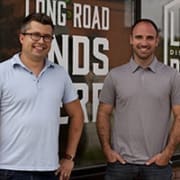
Jon O’Connor and Kyle VanStrien decided to bring the first micro distillery to Grand Rapids to share their own love for high quality spirits with fellow connoisseurs. Long Road is set to open this fall on the corner of Leonard and Quarry, in the heart of GR’s west side.

I immediately asked about the name for their business, and was pleased with how multi-faceted the answer was.  “First, Leonard St is a very long road, running from east of town all the way to the Lakeshore on the West. It also happens to be the longest traditional business district in the City, something we’re proud to highlight.  Second, and more importantly, the name Long Road Distillers speaks to the way we craft our spirits – the right way, taking no shortcuts,” says Van Strien.   “That means we will take the time to source our ingredients locally whenever possible in order to support and highlight the rich agricultural resources of our region. It means we will mill all of our own grain, and mash, ferment and distill all of our own spirits in-house.”

The building itself has had a long road to being distillation friendly.  As the second floor was formerly apartments, on top of century-old tin ceilings, O’Connor and Van Strien have worked carefully to maintain the historic integrity of the building, while crafting a destination for craft beverage lovers to flock to that can showcase the craft distillation process.

Educating the consumer about the process is at the forefront of the business plan to bring this craft to Grand Rapids.  While there will be small meat and cheese boards and light appetizer options for customers, the owners plan on continuing a partnership with their neighbors The Mitten Brewing Co. and Two Scott’s BBQ, a new venture set to open in the newly renovated Rootbeer Stand just across Leonard St.

For the drink menu, O’Connor was already able to hint at the goodness to come.  The first product will be a vodka distilled from local Red Winter wheat.  Vodka is a jumping off point for their two gin varieties, a traditional Bristish style and a unique style referred to as New American.  A good vodka is also an opportunity to utilize this region’s impressive agricultural offerings; a blueberry vodka will be the first infusion experiment of many.

Although all of those, and an Applejack as well, will be wonderful to round out Long Road’s spirits flights, O’Connor says that “Whiskey is what really got Kyle and I excited about distilling, however to craft a whiskey of any quality takes time aging in a barrel. Our production for aged spirits will begin right away, however as Un-Aged or White Whiskey is quite delicious and growing in popularity, we will offer both an un-aged rye and un-aged corn whiskey. The rye and the corn whiskies will, after spending a couple years in barrels, be released in the future as a straight rye whiskey and a bourbon.”

This is an exciting step for Grand Rapids and it’s great to see this city take that step from brew culture to craft culture.  “People in this area understand and appreciate the importance of a locally made product. We owe a lot of credit to all of the breweries who have helped create a culture of adventure in expanding the palates of consumers. People are curious about where their food and beverages are coming from, who made them, and what went into the process”, says Van Strien.

Experience Grand Rapids – Full Article

Lyndsay Israel, August 14, 2014

This fall Long Road Distillers, Grand Rapids’ first and only craft distillery, will join the ranks of established and upcoming businesses peppering the Leonard Street corridor.

The two story brick building, a former clothing store at 537 Leonard Street NW, is currently under renovation to house Long Road, which the entire operation- from milling the grain to pouring cocktails- will function. At approximately 8,000 total square feet, about 1,500 feet on the north ground level will be used for production space with the remaining 2,500 feet of space on the ground level dedicated as the cocktail lounge, seating up to 80 people.

The north end of the lounge will feature a glass wall encasing the 14 1/2 foot still that will be erected through the ceiling into the second floor. A second, narrower 25 foot still will be added within the first year. The 14 foot, 300 liter batch still is capable of producing 7,500 cases per year. With the second still added the total production will max out at 20,000 cases per year.

The second level will have a more laid back feel, with foosball and other games, and be amenable for group events with seating up to 120 people.

Production will start with red wheat vodka, which will serve as a base for flavored vodkas. A couple of varieties of gin from dry to citrus and floral, white whiskey, aged bourbon and rye bases will fill out the menu. Long Road is working with a local farmer to source red winter wheat, rye and corn.

“We’re selling you a craft product that we hope and we believe will be as good as any product you can buy anywhere in the world,” says co-owner Jon O’Connor.” “It’s a little more costly for us to do that, so we want to make sure that we can have that consistently high quality product that people will understand and appreciate and pay the premium price for.”

Their licensure allows Long Road to distribute, sell bottles out the door and do tastings.

“Initially our goal is to do everything we can right here and sell out the front door and in cocktail form whatever we can because we want to make sure that we can meet local demand and we’re not running out,” says co-owner Kyle Van Strien.

“We’re in the spirit business,” says O’Connor. “We’re not trying to get into the food business. But we know that when you have a cocktail you want to have something good to munch on along the way.”

To meet that need, the distillery will serve light dishes such as cured meats, cheeses, veggies, dips, sandwiches and desserts.

For patrons inclined more towards other alcoholic drinks, Long Road is applying for a microbrew license to provide at least one of their own beers on tap as an alternative. Adding to the variety will include ciders and possibly wine.

Both Van Strien and O’Connor have been west side residents since their college days nearly ten years ago. The two initially met while serving on the West Grand Neighborhood Organization board of directors. They collaborated to start the WelcomeWest non-profit that hosts the annual WinterWestevent.

Their commitment to the West Side is why Leonard Street is the perfect place to open the distillery.

“That’s why we’re here, because everything we’ve done in our spare time for the past 10 years has been for the West Side and in the West Side,” says Van Strien.

“We’ve been preaching the merits of the West Side since we’ve been in town,” says O’Connor.

Rapidian – Full Article

Eric Tank, July 1, 2014

We are one step closer after receiving approval from the Department of the Treasury – Alcohol and Tobacco Tax and Trade Bureau (from this point forward referred to as the TTB) for our Distilled Spirits Plant!

The Grand Rapids School Board is guaranteed at least one new member after the November election with Jon O’Connor deciding not to seek reelection to pursue a new business venture on the city’s West Side.

Five of the board’s nine 4-year seats will be on the Nov. 4 ballot. Board president Wendy Falb, vice president Maureen Slade and Tony Baker plan to seek second terms. John Matias, who was appointed July 13, 2013 to replace now-City Commissioner Senita Lenear, will be seeking his first full term.

No one has filed yet with the city clerk’s office. The filing deadline is July 22 at 4 p.m.

This fall, O’Connor and business partner Kyle Van Strien will be educating the community about the spirits world with the planned launch of the city’s first craft distillery, Long Road Distillers, a cocktail bar and lounge under renovation at 537 Leonard St. NW.

“We feel like there is some momentum here on the West Side, and we think we can help make this neighborhood a destination place with what will be a world-class craft distillery,” said O’Connor, who owns West Michigan Appraisers and is completing his first term on the school board.

“We’ve been telling people for a long time the West Side is a cool place.”

Revitalizing the West Side neighborhood is a fitting goal for O’Connor and Van Strien, former president and vice president of the West Grand Neighborhood Association.

He said part of that revitalization effort was the reopening of Stocking Elementary this school year. O’Connor is candid about what motivated him to run for the school board – getting the neighborhood school reopened after its controversial 2010 closing and bringing on a new superintendent with the skill set to improve the district and change the culture.

“I feel like my two big ticket items are done,” said O’Connor, who said turning around a large district takes time but they’re on the right track. “Superintendent Neal’s Transformation Plan is a step in the right direction. The biggest challenge going forward is growing the enrollment.”

The challenge before him and Van Strien, project coordinator for Friends of Grand Rapids Parks and a city planning commissioner, is transforming their two-story, 8,000-square-foot space into that hip destination place. They plan to invest at least $750,000.

Van Strien said people will be able to view the craft spirits being produced by the micro-distillery. He said a lot of people don’t know the difference between a distillery that produces spirits such as vodka and whiskey and a brewery that produces beer.

Long Road Distillers will be able to produce both on site. Patrons can enjoy spirits as well as beer and wine. The cocktail bar won’t have a full restaurant, rather just appetizers and some small-plate offerings.

“To set us apart from some of the spirit brands that people know of such as Absolut and Smirnoff, we are a micro-distillery and our equipment is extremely flexible and will allow us to change the products we are distilling on almost a daily basis, if not hourly,” said Van Strien, who said they can do four runs in a day.

“From our vodka, we can make gin or an infused vodka with local blueberries or raspberries and experiment with apples, for example. Ultimately, we want to be in the business of recreating this neighborhood through investment in businesses like ours and helping others invest as well, so we can have a resurgence here.”

He said the area has largest traditional business district in the city.

The business, which will employ around 15 people initially, gets its name in part from Leonard being a long road, as well as their commitment to not taking short cuts with creating spirits.

O’Connor said he thinks their business complements the Mitten Brewing Company, the microbrewery located next door in the historic Grand Rapids firehouse.

He said he wants to see a high level of market synergy on the street, in which Individual businesses are working together to be more successful and to spur that revitalization.

Mlive – Full Story

Monica Scott, May 29, 2014

The city’s west side is about to get a craft distillery.

The Grand Rapids Planning Commission approved Long Road Distillers last month, and co-owners Jon O’Connor and Kyle Van Strien said work is underway to rehab the distillery’s future home at 537 Leonard St. NW.

The 8,000-square-foot space will be renovated to include a retail space, cocktail lounge, kitchen and bar, overflow seating and the on-site distillery.

The floor plans have yet to be finalized, but Van Strien said he wants to make sure patrons have the opportunity to view the distillation equipment and be able to ask questions and learn about the process.

He estimated the initial investment to get the business up and running will be at least $750,000.

Nate Willink of Willink Construction will serve as the project’s general contractor; Neale Bauman of The Design Forum is the architect.

O’Connor and Van Strien expect to open to the public in mid- to late fall.

The pair said their products will not go into distribution right way, but they expect that to happen somewhere down the road.

“We want to be able to sell out the front door and meet the demand locally,” Van Strien said.

Long Road Distillers will start production with vodka and gin, adding white whiskey, whiskey and malted gin later.

All of the spirits will be “grain to glass,” meaning Long Road will start with grain purchased from area farms and distill the spirits on site.

“It’s very important to us, and we will be the only West Michigan distillery that is doing clear spirits from grain,” Van Strien said.

O’Connor said grain-to-glass production is both costly and time consuming.

“In order to get to the point where you can make vodka, per se, from grain, it has to go through a certain number of rectifications to get to a certain alcohol percentage,” he explained. “Most people don’t have the equipment capable of doing that.”

All of the distillery equipment is coming from Germany where it is made by hand, requiring a seven- to nine-month lead-time.

Once it is up and running at full capacity, the distillery should be able to produce 6,000 to 7,000 12-bottle cases annually, Van Strien said.

“With the addition of a new pot, we could significantly increase that,” he added. “In our first year or two, we will definitely be looking to expand our production capacity because we anticipate there will be demand for the product in the market and particularly when we want to go to distribution. We’ve had a couple of conversations with distributors and we expect that we will want that ability to make more and more.”

Pricing has yet to be determined, but the spirits will be in the premium category.

O’Connor and Van Strien agree the craft beer scene in West Michigan has laid the foundation for the introduction of grain-to-glass spirits using local ingredients.

“Founders and Bell’s have laid the foundation for the craft brew movement, and now Harmony and The Mitten and other local breweries have really helped bring people’s awareness to the local craft alcohol industry, so we think the market is primed for a craft distillery in Grand Rapids,” O’Connor said. “People have a real understanding and appreciation for wanting to know where their products come from and, hopefully, we can capitalize on the knowledge base.”

Long Road Distillers plans to work with area farms to source ingredients locally.

“We want to support West Michigan farmers and growers, and by doing this, we are actually going to be able to highlight the characteristics of the products that we are going to use to make our spirits,” O’Connor said.

The pair chose to become neighbors with The Mitten Brewing Co. in hopes of creating a synergistic experience. They don’t think it will be a competition as much as a complementary opportunity, giving patrons two great establishments next door to each other.

“It will be a real vibrant corner over here. It can be a destination,” O’Connor said.

The two men are west side residents and said they didn’t even consider locations other than on the west side, which they are excited to see finally receiving the attention it deserves.

In addition to spirits, Long Road Distillers will offer a small plate menu and a coffee and dessert menu.

The new business will employ between 20 to 25 people.

Grand Rapids Business Journal – Full Story

Charlsie Dewey, April 11, 2014

You can soon add craft spirits to Grand Rapids’ craft brewing reputation. The Grand Rapids City planning commission unanimously approved West Michigan’s second craft distillery on Thursday.

Long Road Distillers leased space on West Leonard Street and now they have the go-ahead to establish a micro-distillery, tasting room, and special event space.

Long Road Distillers will open this fall at 537 Leonard Street NW, across Quarry Avenue from Mitten Brewing Co.

In co-ownerKyle Van Strien’s eyes, Mitten Brewing Company is a Westside success story.

“They were an example of, they’ve done a great job, they’ve made it work,” he said.

Now he stands across the street from the Mitten, fresh of the city’s unanimous decision to move forward with his plans, inspired to turn an old brick building into a booming distillery. He and co-owner Jon O’Connor are long-time, active Westside residents.

“We’ve just been really passionate about the Westside, we love the Westside,” said O’Connor.

The city gave them the unanimous go-ahead to renovate the 8-thousand-square-foot space. The clothing company will move out, making way for a tasting room and special events space.

“We’re the first grain-to-glass distillery in the city,” he said.

“There will be barrel storage here, fermenters laying the wall, and our still will sit up in the tasting room and be glassed off so people can see it when they walk in,” he said.

Van Strien is excited for what customers will taste at the new Long Road Distillers.

“A really high-quality vodka, a gin, a clear whisky, and then a malted gin,” he said.

It’s all coming from Michigan farmlands. Flavored spirits will come later, along with distribution.

But the immediate concern now is parking. Some neighbors and businesses say there isn’t enough already and they went before the city with their concerns. Jamie Taylor represented her business, Grand Rapids Hydroponics, which is directly across the street from the Mitten.

“Their customers park in front of our store and they’ll be there eating lunch and stuff and it limits us because we have to carry those out and load their cars. And if they’re parks blocks away it can be a big issue,” she said.

Van Strien says they’re working to accommodate.

“Our deliveries, coming through our parking lot in the morning, by re-surfacing our parking lot and re-orienting it so there’s more parking spots.

He and O’Conner will add 11 spots behind the distillery and the church parking lot across the street will lease 25 spots. It already leases to the Mitten. They expect a crowd; it remains to be seen how congested the area will get.

“There’s a bus stop right there,” he said. “People can take the bus to get here and to go home.”

The owners say music will be an acoustic; nothing too loud. There’s a few restrictions. The bar area must close by midnight Sunday through Thursday.

WZZM – Full Story

Book A Tour